
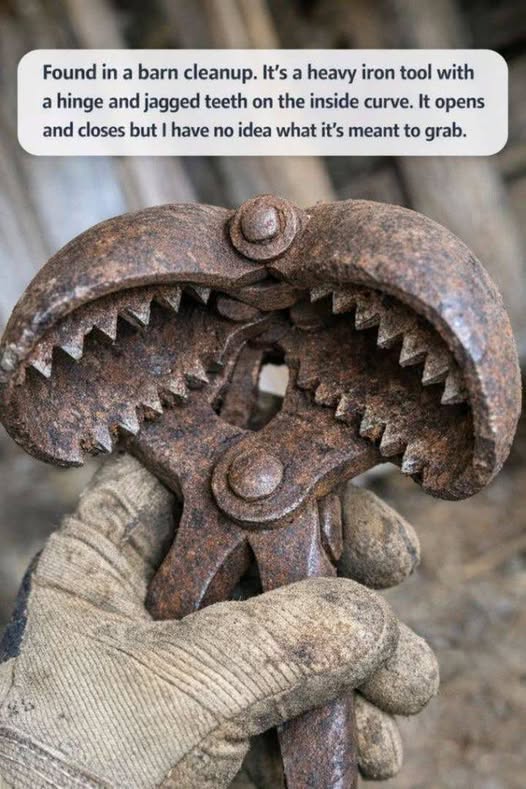
Have you ever discovered an old, rusty tool in a barn, shed, or forgotten storage room and wondered what people used it for decades ago? Before modern machinery became common, farmers and craftspeople relied on specialized tools to repair equipment, care for animals, work the land, and complete everyday tasks.
Some of these tools look so unusual today that identifying their original purpose can be a real challenge!
Why Old Farm Tools Can Be Difficult to Identify
Traditional tools were often designed for one specific job. Their shapes depended on the materials available, the type of work being performed, and the practical needs of the people who used them.
Over time, rust, dirt, and wear can hide important details, making an already mysterious object even harder to recognize.
Here are a few possibilities when you discover an unfamiliar metal tool in an old barn.
1. A Traditional Agricultural Tool
Farmers used a wide variety of hand tools to prepare soil, cut vegetation, harvest crops, and maintain fields. Some had unusual blades or curved metal ends designed for particular agricultural tasks.
2. A Blacksmith’s or Carpenter’s Tool
Old barns often served as workshops, too. Metalworking and woodworking tools could include specialized hammers, punches, clamps, and cutting implements. Their shapes and marks may provide clues about their original use.
3. A Tool for Caring for Animals
Some traditional tools were designed for handling livestock, maintaining harnesses, or caring for horses and other farm animals. Objects found near old stables may have been associated with these activities, although their location alone cannot confirm their purpose.
4. A Part From an Old Machine
Not every rusty object was a hand tool. It could be a component from an agricultural machine, wagon, gate, or piece of workshop equipment. Holes, threads, joints, and attachment points can sometimes reveal how it fitted into a larger structure.
How Can You Identify the Mystery Tool?
If you want to uncover its history, examine these details carefully:
- Shape: Look at the overall outline, including any curves, points, or unusual extensions.
- Material: Determine whether it appears to be iron, steel, or another metal.
- Marks: Look for stamped letters, numbers, logos, or maker’s marks.
- Construction: Check for handles, hinges, holes, threads, or places where another component may have been attached.
- Context: Consider where it was found and what other objects were stored nearby.
Avoid aggressive cleaning before documenting the tool. Old markings and surface details may help establish its identity and age.
If the object has sharp edges, unknown residues, or an unusual mechanism, handle it cautiously. Do not test it until you have a better understanding of what it is.
Can You Solve the Mystery?
Sometimes, a forgotten tool tells a fascinating story about how people worked and lived before modern technology transformed everyday life.
But without a photograph or a detailed description, it is impossible to identify this particular object reliably.
Have you ever found a strange old tool in a barn or workshop? Share a photograph and your best guess in the comments. You might recognize something that others have never seen before!