
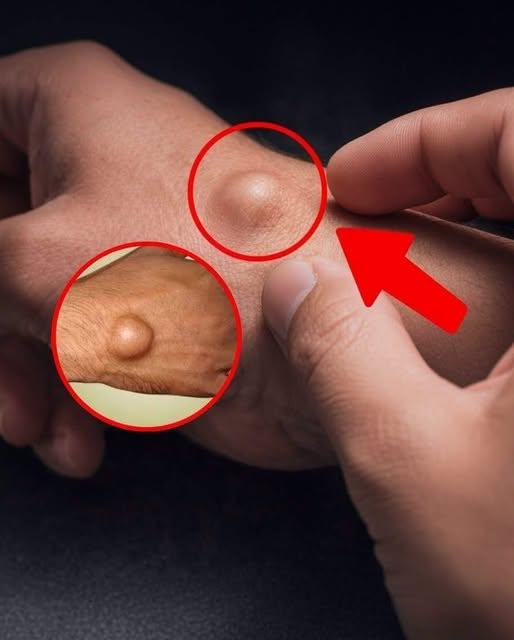
Discovering a lump on your hand can be worrying, especially when it appears unexpectedly or seems to grow over time. You might notice a small bump near your wrist, a firm lump on your finger, or a swelling beneath the skin that becomes more noticeable when you move your hand.
The good news is that many hand lumps are caused by noncancerous conditions. However, their appearance alone cannot tell you exactly what they are, and some deserve medical attention.
Here are some common possible causes and the signs to look out for.
1. Ganglion Cysts
One of the most common causes of a lump around the wrist or hand is a ganglion cyst. These are fluid-filled lumps that often develop near joints or tendons.
They may feel soft or firm, and their size can change over time. Some cause no discomfort, while others can produce pain, tingling, or restricted movement if they press on nearby structures.
Ganglion cysts are generally noncancerous, but a healthcare professional can help confirm the diagnosis.
2. Knuckle Pads or Thickened Skin
Repeated pressure or friction can sometimes cause thickened skin over the fingers or knuckles. These areas may feel firm and appear as small raised bumps.
If the skin becomes painful, cracked, red, or inflamed, it is worth having it examined.
3. Arthritis-Related Lumps
Certain types of arthritis can cause bumps around the finger joints.
Osteoarthritis may produce firm bony enlargements near the joints, particularly in the fingers. Rheumatoid arthritis can also cause nodules in some people.
Joint pain, stiffness, swelling, or difficulty moving your fingers may provide additional clues, but a medical examination is needed to distinguish these conditions.
4. Giant Cell Tumors of the Tendon Sheath
Despite the alarming name, these are usually noncancerous growths that can develop near the tendons of the fingers or hand.
They often appear as a slowly growing, firm lump and may interfere with movement depending on their location.
A clinician may recommend imaging or other tests to determine what the lump is.
5. Lipomas
A lipoma is a benign growth made of fatty tissue. It often feels soft, moves slightly beneath the skin, and grows slowly.
Lipomas can occur in different parts of the body, including the hands, although they are less common there than in some other locations.
A new or changing lump should not automatically be assumed to be a lipoma without an appropriate assessment.
6. Infections or Inflammation
A lump that develops alongside redness, warmth, tenderness, or swelling may be related to an infection or inflammatory condition.
Infections can sometimes occur after a cut, puncture wound, bite, or splinter. Some require prompt treatment, particularly when swelling spreads or movement becomes painful.
Seek urgent medical care if you have rapidly increasing swelling, severe pain, fever, spreading redness, or difficulty moving your fingers.
7. Other, Less Common Growths
Not every hand lump fits into one of the categories above. Less common growths can also occur, and occasionally a lump may require further investigation to rule out a serious condition.
Arrange a medical appointment if the lump is growing, feels fixed to deeper tissues, causes persistent pain, changes the skin above it, or does not improve.
What Should You Do If You Find a Lump?
Start by observing when it appeared, whether it is changing in size, and whether you have pain, numbness, redness, or difficulty moving your hand.
Do not squeeze, puncture, or attempt to drain the lump yourself. A healthcare professional may examine it and, if necessary, recommend an ultrasound, X-ray, or other investigation.
Many hand lumps are harmless, but getting the correct diagnosis is the safest way to decide whether treatment is needed.
The Bottom Line
A lump on your hand may be caused by a ganglion cyst, arthritis, thickened tissue, a benign growth, or another condition. The location, texture, growth pattern, and associated symptoms can help guide an evaluation, but they cannot establish a diagnosis on their own.
Have you ever noticed a small lump on your wrist, palm, or finger? Share your experience in the comments, and remember that a new or changing lump should be assessed by a healthcare professional rather than diagnosed from appearance alone.