
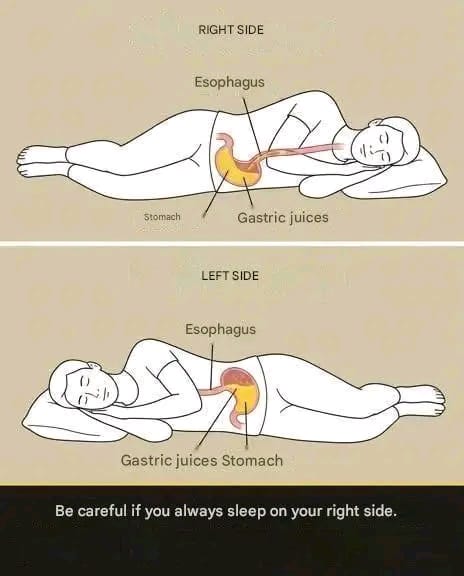
Remember That If You Always Sleep on Your Right Side, You May Notice These Effects
SEO Title: Sleeping on Your Right Side: Benefits, Risks, and What Experts Say
Focus Keyphrase: sleeping on your right side
URL Slug: sleeping-on-your-right-side-health-effects
Meta Description: Does sleeping on your right side affect your health? Discover the potential benefits, possible drawbacks, and when changing your sleeping position may help.
Category: Health & Wellness
Introduction
Have you ever wondered whether the side you sleep on could affect your health? Many people naturally prefer sleeping on their right side and stay in that position for most of the night without giving it much thought.
Your sleeping position can influence comfort, breathing, and certain digestive symptoms. However, the idea that sleeping on your right side is automatically harmful is not supported by scientific evidence. For most healthy adults, choosing the right or left side is largely a matter of comfort.
Still, there are situations in which your sleeping position may make a difference. Here is what you should know about sleeping on your right side and how to decide whether it is right for you.
1. It May Affect Acid Reflux
One of the best-understood differences between right-side and left-side sleeping involves acid reflux.
When stomach contents flow back into the esophagus, they can cause heartburn, a burning sensation in the chest, or a sour taste in the mouth. Research suggests that lying on the right side can worsen nighttime reflux in some people, while lying on the left side may reduce it.
If you regularly wake up with heartburn, your sleeping position may be worth reviewing.
What may help: Try sleeping on your left side and avoid lying down for about three hours after eating. Raising the head of your bed with an appropriate wedge may also help. Persistent reflux should be discussed with a healthcare professional.
2. It Can Be a Comfortable Position for Sleep
Sleeping on your right side is not inherently bad for your heart or other organs. For many people, side sleeping is comfortable and can help reduce snoring compared with sleeping flat on the back.
The best position often depends on your body, mattress, pillow, and any existing pain or medical conditions.
If you wake up feeling rested and do not experience discomfort, there is generally no reason to change sides solely because of an alarming online headline.
3. It May Influence Breathing During Sleep
For people with obstructive sleep apnea, sleeping position can affect how easily air moves through the upper airway. Symptoms are often worse when sleeping on the back, and side sleeping may help reduce breathing interruptions in some individuals.
However, the available evidence does not establish that the right side is universally better or worse than the left for breathing.
Warning signs to recognize: Loud habitual snoring, repeated gasping during sleep, witnessed pauses in breathing, and excessive daytime sleepiness may indicate sleep apnea. Speak with a healthcare professional if you experience these symptoms.
4. It May Matter During Pregnancy
During pregnancy, sleeping position becomes more important as the pregnancy progresses.
Healthcare professionals generally advise pregnant people to settle to sleep on their side during the second and third trimesters. Either side can be appropriate, although the left side may offer advantages for blood flow and can help reduce heartburn.
If sleeping on the left side is uncomfortable, switching to the right side is generally a reasonable option. Pregnant people should follow individualized advice from their maternity care team, particularly if they have pregnancy complications.
5. It Can Affect Shoulder, Hip, or Neck Comfort
Sleeping on one side all night can place pressure on the shoulder and hip underneath your body. If your mattress or pillow does not provide adequate support, you may wake up with stiffness, numbness, or discomfort.
This does not necessarily indicate internal organ damage. It may simply reflect pressure, posture, or an existing musculoskeletal problem.
What may help:
- Choose a pillow that keeps your neck aligned with your spine.
- Place a pillow between your knees if it makes your hips or lower back more comfortable.
- Adjust your mattress and sleeping position if pressure causes pain.
- Consider alternating sides if one side repeatedly becomes uncomfortable.
Persistent pain, weakness, or numbness should be assessed rather than automatically attributed to your sleeping position.
6. Does Sleeping on the Right Side Harm Your Heart?
You may encounter claims online that sleeping on the right side damages the heart or prevents proper circulation. These statements are too broad.
For most healthy people, there is no convincing evidence that routinely sleeping on the right side causes heart disease. Some people with heart failure find that one side feels more comfortable than the other, especially if they experience breathlessness when lying down.
If you develop new shortness of breath when lying down, wake up gasping for air, or experience swelling in your legs, seek medical advice. Sudden or severe breathing difficulty or chest pain requires emergency care.
Do not assume these symptoms are simply caused by your preferred sleeping position.
7. Is It Necessary to Change Sides Every Night?
No. There is no universal rule that everyone must alternate between the right and left sides.
Changing positions may help if you experience pressure-related pain or discomfort. However, if your current position allows you to sleep comfortably and you have no position-related symptoms, there is usually no need to force yourself to sleep differently.
People with particular medical conditions may benefit from specific positioning advice, so individual circumstances matter more than generalized social-media claims.
How to Choose a Comfortable Sleeping Position
A healthy sleeping routine involves more than which side you choose. Try to maintain a regular sleep schedule, use a supportive pillow and mattress, and create a comfortable, quiet bedroom.
If you experience nighttime reflux, consider the left side and avoid late meals. If you snore heavily or feel excessively sleepy during the day, ask about possible sleep apnea. If pregnancy or a medical condition affects your comfort, seek advice tailored to your situation.
Frequently Asked Questions
Is sleeping on the right side bad for your kidneys?
There is no strong evidence that sleeping on the right side damages healthy kidneys. Persistent kidney-related symptoms should be assessed medically rather than attributed to sleep position.
Which side is best for digestion?
For people with nighttime acid reflux, sleeping on the left side may reduce reflux compared with the right side. This does not mean everyone needs to sleep on the left.
Can sleeping on one side cause wrinkles?
Sleeping with your face pressed against a pillow may contribute to temporary creases and possibly to sleep-related skin compression over time. The degree of any long-term effect varies, and evidence does not justify treating one side as universally harmful.
What is the healthiest sleeping position?
There is no single ideal position for everyone. Side sleeping can be useful for people with certain breathing problems, while the left side may help people with acid reflux. Comfort, medical history, and sleep quality should guide your choice.
Final Thoughts
If you always sleep on your right side, there is usually no reason to panic. For most people, this is a normal and safe sleeping position.
The main exception is when your position appears to worsen a specific problem, such as nighttime acid reflux or pressure-related pain. In those cases, a simple adjustment may improve comfort and sleep quality.
Rather than believing frightening headlines, pay attention to your symptoms and seek medical guidance when necessary. A comfortable position that supports good-quality sleep is generally a better goal than trying to follow a universal rule about which side to sleep on.
Medical disclaimer: This article is for educational purposes only and does not replace personalized medical advice, diagnosis, or treatment.