
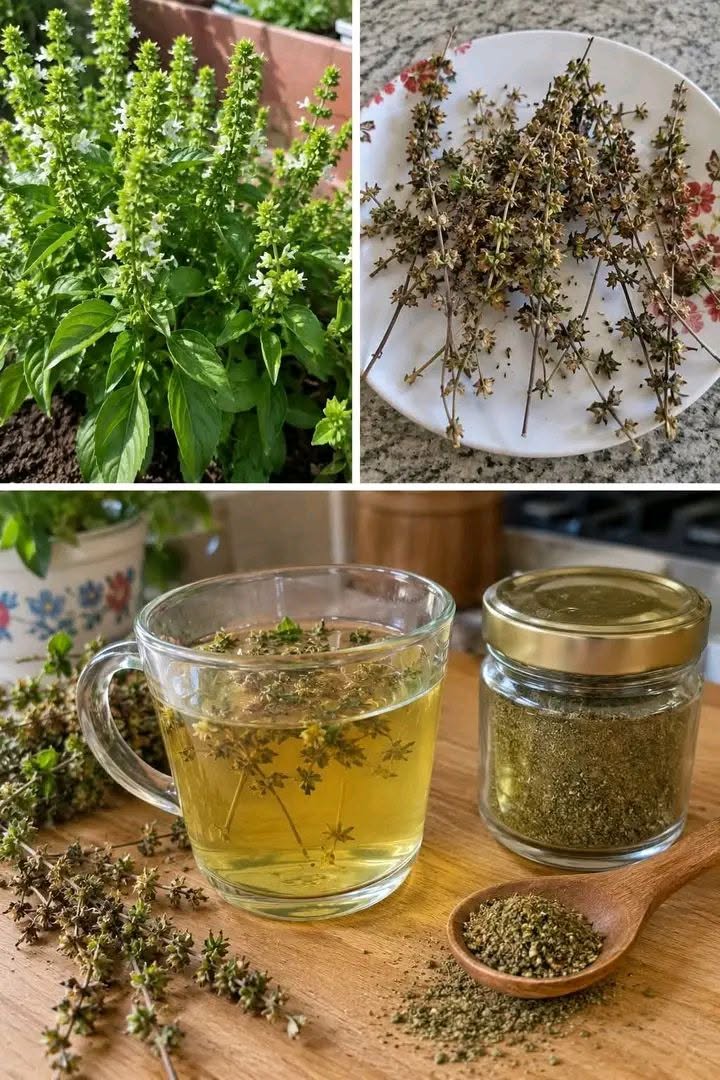
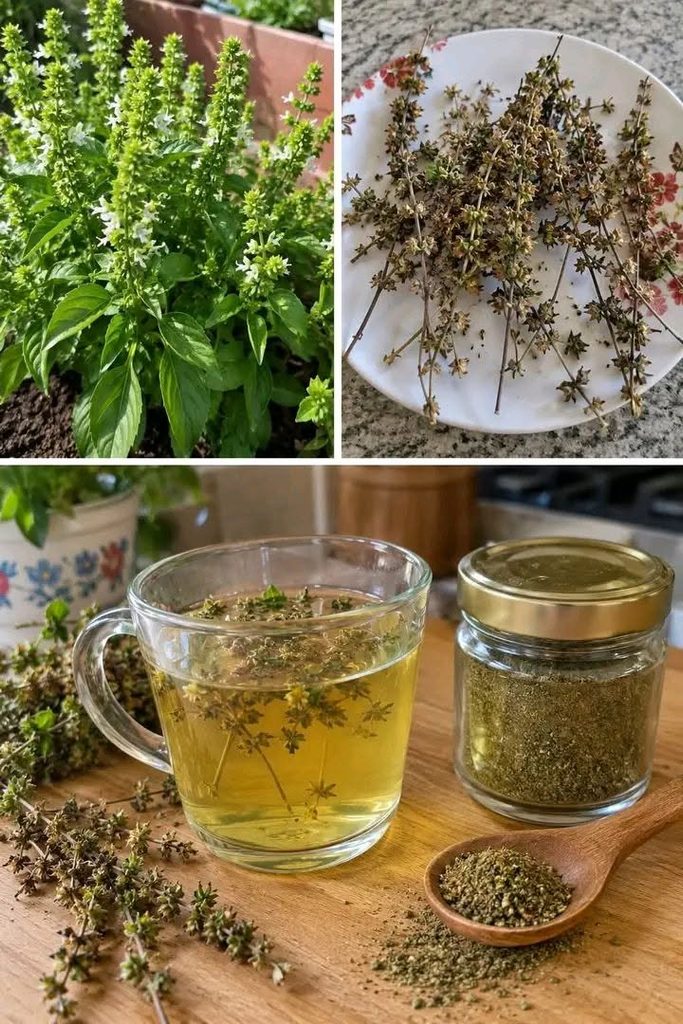
If you grow basil at home, you may have noticed small flowers appearing at the tips of its stems. Many gardeners immediately remove them because they believe flowering means the plant is no longer useful. But before throwing those flowers away, there are several things worth knowing.
Basil flowers can be useful in the kitchen, attractive to pollinators, and valuable for collecting seeds. With a little care, you can make the most of your basil plant throughout the growing season.
Why Does Basil Produce Flowers?
Basil is an aromatic herb that eventually produces flowers as part of its natural life cycle. Flowering often becomes more noticeable during warm weather, especially when the plant receives plenty of sunlight or begins to mature.
Once basil starts flowering, its growth pattern can change. The plant may produce fewer tender leaves, and the flavor of its foliage can become stronger or slightly different.
However, flowering does not mean your basil is suddenly useless. You can continue harvesting its leaves and making use of its flowers.
1. Basil Flowers Are Edible
One of the simplest ways to use basil flowers is in cooking. Many common culinary basil varieties produce edible flowers with a flavor that resembles the leaves, although the intensity can vary.
You can try adding fresh basil flowers to:
- Tomato salads and fresh vegetable dishes.
- Homemade pasta sauces.
- Pizza and Mediterranean-inspired meals.
- Sandwiches and wraps.
- Soups or dishes that benefit from a fresh herbal garnish.
Use flowers from basil plants that have been grown for culinary use and have not been treated with pesticides unsuitable for food. Wash them gently before serving.
Start with a small amount to see whether you enjoy their flavor.
2. They Attract Helpful Pollinators
Basil flowers can provide nectar and pollen for bees and other visiting insects.
Allowing some stems to flower can make your garden more attractive to pollinators, which play an important role in many ecosystems.
If you grow vegetables, herbs, or flowering plants nearby, maintaining a variety of blooming plants can help support local pollinator populations.
3. You Can Save Seeds for Next Season
If you want to grow basil again next year, leaving some flowers on the plant can be especially useful.
After pollination, the flowers may develop seed-producing structures. As the flower spikes mature and dry, you can collect the seeds for future planting.
To save seeds:
- Allow a few flower spikes to mature fully on the plant.
- Wait until the flowers and seed heads become dry and brown.
- Harvest them carefully over a clean container.
- Separate the tiny seeds from the dried plant material.
- Store the seeds in a labeled, dry container in a cool location.
Seed production depends on the basil variety and successful pollination. Some varieties may also cross-pollinate with other basil plants nearby.
4. Should You Remove Basil Flowers or Leave Them?
The answer depends on what you want from your plant.
If your goal is to harvest lots of tender leaves: Pinch off the developing flower tips. This can encourage branching and help the plant maintain leafy growth.
If you want to support pollinators: Leave some flower spikes to bloom.
If you want to save seeds: Allow selected flowers to mature and dry.
You can also combine these approaches by removing flowers from some stems while allowing others to bloom.
5. Can Basil Flowers Be Used in Homemade Herbal Preparations?
Basil flowers can be used to flavor water, vinegar, or culinary infusions, depending on the variety and your preferences.
However, claims that basil flower tea detoxifies the body, balances hormones, or treats medical conditions are not well established. Enjoy these flowers as a culinary ingredient rather than relying on them as a medicine.
Avoid using essential oils or concentrated homemade preparations as treatments without appropriate professional guidance.
How to Keep Your Basil Plant Healthy
Whether your basil is flowering or producing leaves, a few basic care practices can help it thrive.
- Provide plenty of sunlight, while protecting the plant from excessive heat when necessary.
- Water when the soil begins to dry, without leaving the roots constantly waterlogged.
- Harvest leaves regularly to encourage branching.
- Use well-draining soil and a suitable container if growing basil indoors.
- Watch for pests and remove damaged foliage when needed.
Basil is often grown as an annual herb, so flowering and seed production are normal stages of its life cycle.
Final Thoughts
Basil flowers are not waste. They can add a delicate herbal touch to meals, attract pollinators, and provide seeds for future plants.
If you want a bushy basil plant with plenty of leaves, remove the flower tips regularly. If you prefer to support wildlife or collect seeds, leave a few stems to mature.
What do you usually do when your basil starts flowering: remove the flowers or let them grow? Share your gardening tips in the comments!