
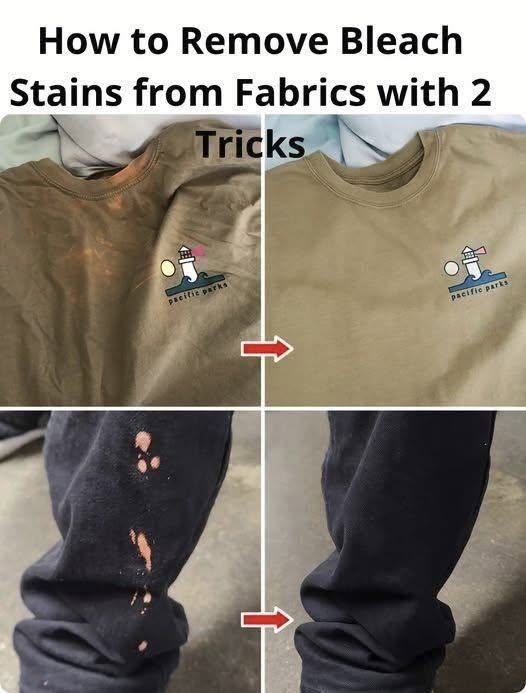
Have you ever accidentally spilled bleach on your favorite shirt, towel, or pair of trousers? A small splash can leave a pale spot that seems impossible to remove. Before throwing the garment away, it helps to understand what bleach actually does to fabric and which solutions are worth trying.
The truth is that traditional bleach stains are not ordinary stains. In most cases, bleach removes or alters the fabric’s original dye rather than leaving a substance on the surface. That means the best solution is usually to restore the color, not simply wash the spot.
Why Does Bleach Leave Marks on Clothes?
Household chlorine bleach is a powerful chemical that breaks down many colored compounds. When it comes into contact with dyed fabric, it can remove the color from that area, leaving a white, yellowish, orange, or lighter patch.
The result depends on the fabric, its dye, the bleach concentration, and how long the chemical remains in contact with the material.
Unfortunately, once the dye has been damaged, ordinary laundry detergent generally cannot restore the original color.
1. Rinse the Affected Area Immediately
If the bleach spill has just happened, act quickly.
- Rinse the affected fabric thoroughly with plenty of cool running water.
- Follow the garment’s care label.
- Wash the item separately if appropriate, using your usual laundry detergent.
- Keep the garment away from other clothing until it has been thoroughly rinsed.
Quick rinsing can limit further damage, although it cannot reverse color that has already been removed.
Important: Never mix bleach with vinegar, ammonia, toilet cleaner, or other cleaning products. Dangerous gases can form. Rinse the fabric thoroughly with water before using any other product.
2. Try a Fabric Color Restorer
For a small, pale bleach mark, a fabric color-restoration product may help improve the appearance of the garment.
Choose a product specifically designed for the fabric and color involved. Always test it on a hidden area first and follow the manufacturer’s directions.
Results vary, and a color restorer may not perfectly match the surrounding fabric.
3. Use Fabric Dye for Larger Bleach Marks
If bleach has removed color from a large area, fabric dye may be a more practical option.
For the best results:
- Check whether the garment is made from cotton, linen, polyester, wool, or a blend.
- Choose a dye suitable for that fiber type.
- Follow the dye manufacturer’s instructions carefully.
- Consider dyeing the entire garment rather than treating only the damaged spot, which can help create a more even appearance.
Some synthetic fabrics require specialized dyes, and severely damaged fibers may not respond well to recoloring.
4. Turn the Mark into a Design
Sometimes, the easiest solution is to transform the damaged area into something intentional.
Depending on the garment, you could consider:
- Covering a small mark with an embroidered design or patch.
- Using fabric paint to create a decorative pattern.
- Applying a suitable textile repair patch.
- Creating a deliberate tie-dye effect, but only with a product and method appropriate for the fabric.
These options can be especially useful when the original color cannot be restored.
What About Baking Soda, Vinegar, or Toothpaste?
Many online cleaning tips recommend household ingredients for removing bleach stains. However, these methods do not restore dye that has already been removed.
Baking soda, vinegar, and toothpaste are not reliable solutions for recoloring bleached fabric. Vinegar must never be mixed directly with bleach because the combination can release toxic chlorine gas.
If the fabric has already lost its color, focus on safe color restoration or repair instead of repeatedly applying cleaning products.
Can You Prevent Bleach Damage in the Future?
A few simple habits can help protect your clothes:
- Wear old clothing when cleaning with bleach.
- Follow the dilution and safety instructions on the product label.
- Keep bleach away from colored fabrics.
- Store bleach securely and never transfer it into an unlabeled container.
- Consider using an oxygen-based laundry bleach when suitable for the fabric, following its label instructions.
Remember that oxygen bleach and chlorine bleach are different products and are not interchangeable in every situation.
Final Thoughts
Bleach stains can be frustrating, especially when they affect a favorite item of clothing. Unfortunately, once bleach removes the original dye, washing alone will not bring the color back.
The most effective approach is to rinse fresh spills immediately, assess the damage, and choose a suitable fabric dye, color restorer, or creative repair method. With the right technique, you may be able to save the garment instead of replacing it.
Have you ever rescued clothes damaged by bleach? Share the method that worked for you in the comments!