
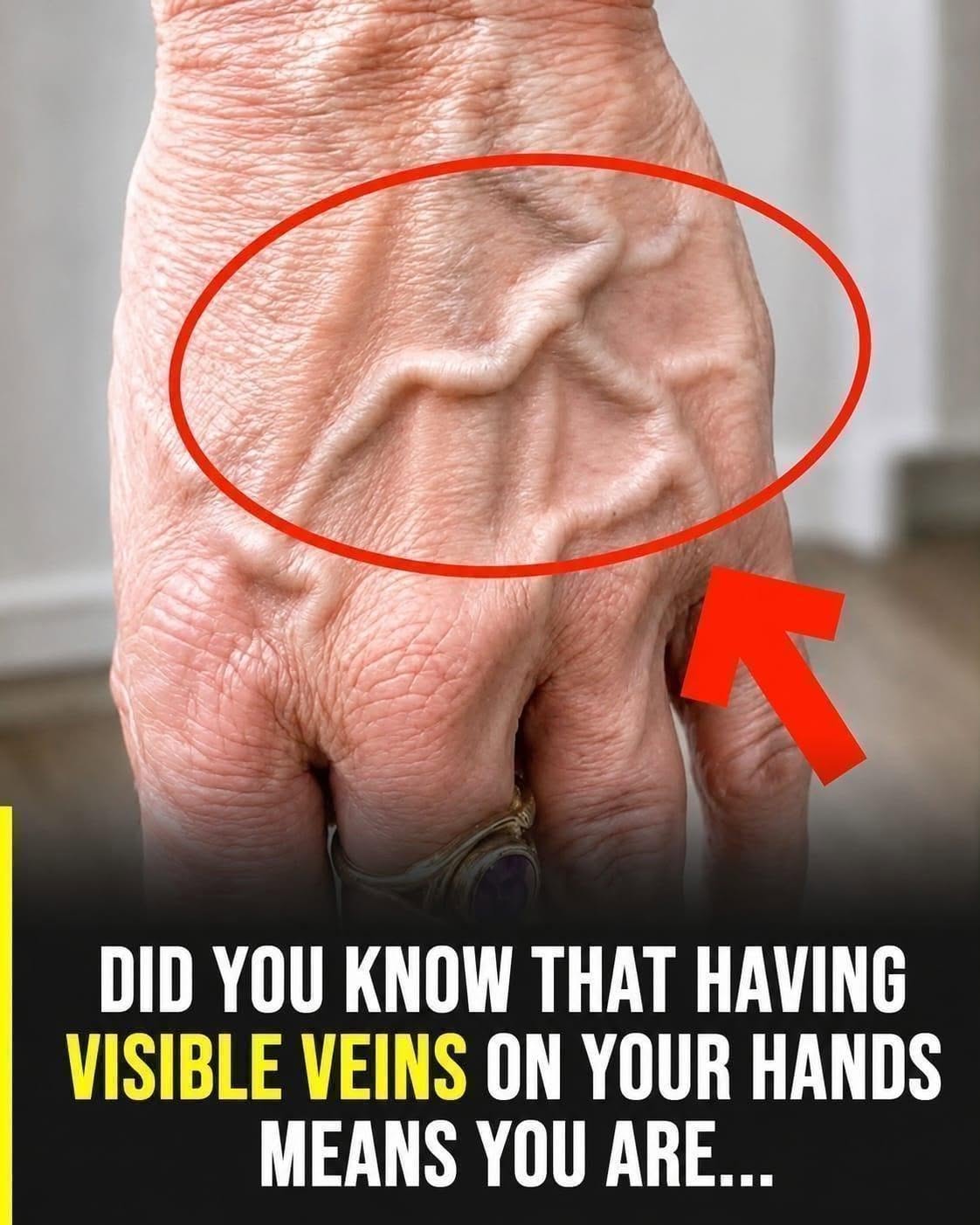

Have you ever noticed the veins on your hands, arms, or legs becoming more visible? For some people, these veins are easy to see every day, while others notice them more after exercising, spending time in warm weather, or losing weight.
Visible veins are often completely normal. However, understanding why they appear can help you recognize when a change might deserve medical attention.
1. You May Have Less Fat Under Your Skin
One of the most common reasons veins become visible is a lower amount of subcutaneous fat, the layer of fat beneath the skin. When this layer is thinner, veins may stand out more clearly, particularly on the hands, forearms, and legs.
2. You May Have Naturally Thin Skin
Skin thickness varies from person to person. As skin becomes thinner with age, underlying veins can become more noticeable. Genetics also plays a role in how visible your veins are.
3. Exercise Can Make Your Veins Stand Out
During physical activity, blood flow to working muscles increases. This can temporarily make veins appear larger or more prominent. People who regularly strength-train may also notice more visible veins because of changes in muscle size and body composition.
4. Warm Weather Can Make Veins More Visible
When temperatures rise, blood vessels near the surface of the skin may widen to help your body release heat. As a result, your veins may look more noticeable after a hot shower, during exercise, or in warm weather.
5. Visible Veins Do Not Automatically Mean Poor Circulation
Prominent veins alone are not enough to diagnose a circulation problem. Many healthy people naturally have visible veins, especially on their hands and forearms.
However, enlarged, twisted veins in the legs may be varicose veins, which can sometimes cause aching, heaviness, itching, or swelling.
6. Hormonal Changes May Affect Their Appearance
Pregnancy and other hormonal changes can affect blood vessels and circulation. During pregnancy, increased blood volume and pressure on the veins can make them more prominent, particularly in the legs.
When Should You Be Concerned?
Although visible veins are usually harmless, certain changes should not be ignored.
Contact a healthcare professional if you notice persistent leg swelling, skin discoloration, painful or bulging veins, or a sudden change in the appearance of your veins.
Seek urgent medical attention if one leg suddenly becomes swollen, warm, red, or painful, as these symptoms can indicate a blood clot. If they occur with chest pain or sudden shortness of breath, seek emergency care immediately.
The Bottom Line
Visible veins do not necessarily mean you have a health problem. Skin thickness, genetics, body composition, exercise, and temperature can all influence how prominent they appear.
Rather than judging your health by the appearance of your veins alone, pay attention to sudden changes, pain, swelling, and other symptoms.
Have you noticed the veins on your hands or arms becoming more visible recently, or have they always looked that way?